
Different Types of Amps – Combo Amps
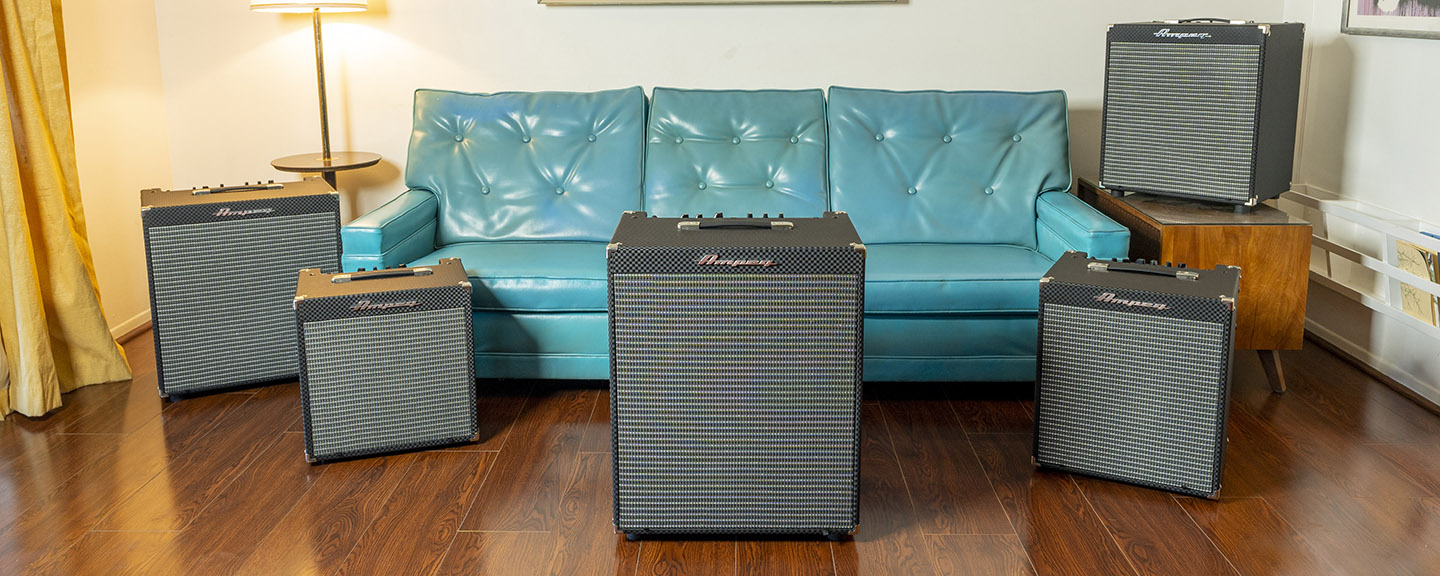
As bassists, we’re always faced with choosing the right gear for the right gig. Strings, basses, pedals, cables, heck, even straps and strap locks! Probably the two most critical components in choosing your gear, though, come down to (in my honest opinion) what bass and what amp. Unfortunately, I can’t help you with the bass part as that becomes a very personal choice on so many levels. When it comes to choosing an amp, though, especially an Ampeg amp, I think I’m somewhat qualified to at least help you sort through some of the differences and give you some helpful guidance.
Let’s start with two simple categories. Combo amp or head and cabinet combination.
There are pros and cons to each so let’s start with combo amps:
Combo Amp
A combo amp is the easiest all-in-one solution. The head and the cabinet are all contained in one “combination.” Generally, when young players are just starting out, this is what most gravitate towards. It’s simple, compact and convenient, and in a lot of cases small enough to fit in a bedroom or practice space. Just something big enough and great sounding to make your practice sessions more enjoyable than just playing acoustically, and especially more enjoyable when playing along with your favorite tunes.
Many times I’ll use a small combo like an RB-108 or RB-110 in my living room or even out on my front porch for when I just want to jam along on ideas or work through a lesson. I actually use my RB-110 for small, upright jazz trio gigs as well.
Now this doesn’t mean you can’t use a combo amp in a pro situation. Some of the bigger Rocket Bass combos like the RB-115 and RB-210 are perfect solutions for larger stages requiring more volume. And because these particular models feature an extension speaker out, should you ever need more volume, you can connect a second speaker cabinet to either of these combos. However, I love the ease of being able to load into a venue with just a combo amp and my bass. This comes in really handy when loading in and navigating through the kitchens and back hallways of some of the hotels and banquet halls I play here in the Boston area. And when stage space is limited, my bandmates truly appreciate me keeping my setup to a minimum.
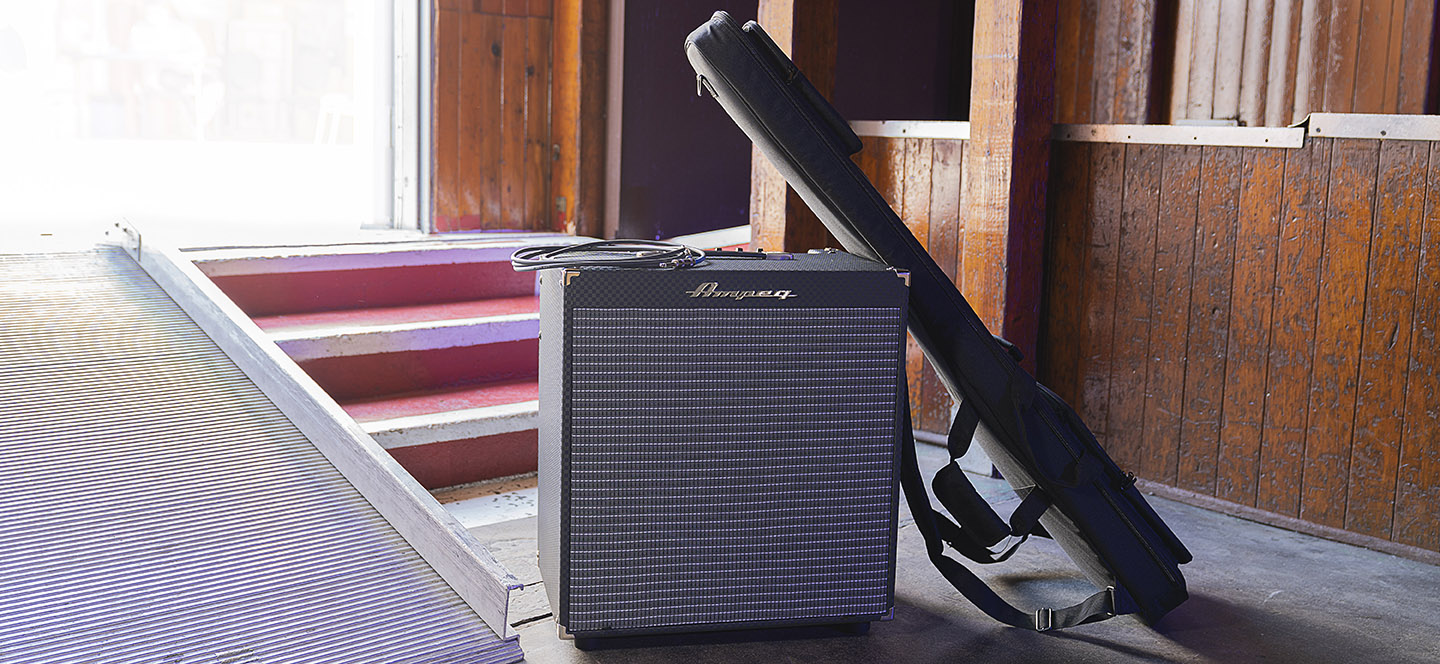
Another advantage of using a combo amp is the ease of setup. Simply roll in, plug in the power cable, plug your bass into the input, set your EQ and volume and you’re ready to rock. There’s literally one less piece of equipment you have to carry in. And, unlike a head and cabinet combination, there’s no placing the head on top of the cabinet and connecting the two with a speaker cable. Which, if you’ve ever had to lean over the top of your head and cab, and “feel” your way around the back of a head and cabinet for the speaker “ins” and “outs,” on a dark stage with limited space, you know exactly what I’m talking about.
Now of course let’s talk about some of the “cons” of using a combo amp.
I think the biggest one may be the limitations of a combo amp. What you see is what you get, and what you’re kind of stuck with. Outside of the RB-115 and RB-210, which offer extension speaker outs, there’s no means to expand on the format (speaker size or power rating), so choose appropriately. Planning on just playing in your bedroom or apartment? Then a small combo is perfect. But if there’s any chance of you eventually going out and jamming with some friends, that small “bedroom” combo might not cut it and now you find yourself looking at a bigger combo amp or maybe a head and cabinet. I always recommend looking at what your immediate needs are, and then go one bigger.
The other less likely disadvantage of a combo amp is serviceability. Should your amp ever need any kind of service or repair, you’re faced with having to leave your entire set up with the shop. There’s no option of grabbing another head from a buddy or borrowing a cabinet from the shop. Although in that same thought, you can always borrow a combo amp from another buddy or maybe the repair shop offers a loaner program of some sort. This is why I say “less likely” anyway.
In either case, though, I think the pros certainly outweigh the cons of choosing a combo amp. And hey, should your needs change from needing something small for your bedroom to needing something bigger for the Metallica tribute band you’re about to join, having two combo amps or two amps of any size isn’t always a bad thing, is it? I always say you can never have too many basses or amps in your life. And anyone that tells you otherwise… Well… you just don’t need that type of negativity in your life! LOL!
Next time, we’ll talk about the pros and cons of going with a separate head and cabinet combination, so be sure to check back.

Dino has spent over 25 years in the Ampeg world conducting seminars and clinics all over the globe. He’s also the author of four instructional bass books published by Mel Bay and his own publishing company, MonoTunes Music. His favorite bass to play is his MTD 534-24.
Leave a Reply
You must be logged in to post a comment.